One of the key findings of the policy stocktaking conducted as MEHI’s project this year is that there is no single silver bullet to accelerate building renovations. The key to success is building a predictable renovation support ecosystem that extends across multiple renovation cycles. Our report highlights that the necessary technical solutions are actually already available. The real challenge lies therefore in aligning the financial, institutional, and professional conditions needed to put them into practice.
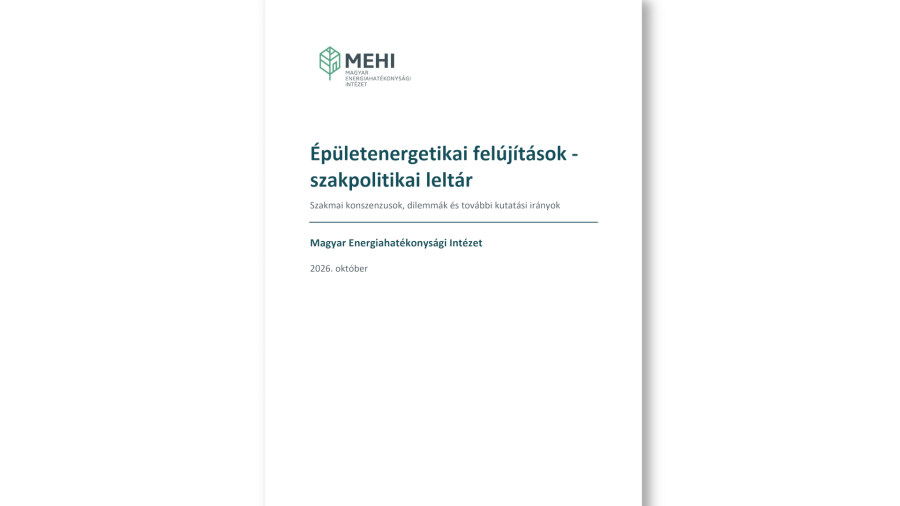
The policy stocktaking of the Hungarian Energy Efficiency Institute examined which areas of the Hungarian building renovation system have reached professional consensus, where open questions remain, and what policy decisions may be needed in the coming period. The primary takeaway of the research is that building renovation cannot be handled through a single support scheme or regulatory instrument: the key to success is a long-term, predictable, and coordinated policy framework.
Our study does not identify any single ‘silver bullet’ capable of significantly accelerating the renovation wave on its own. Although relatively rapid progress can be achieved in certain areas—such as through the development of technical assistance, data infrastructure, monitoring, or financing structures—most of the identified issues require system-level intervention. Based on the research, Hungary has achieved numerous partial results in recent years; however, the policy, institutional, financial, and implementation conditions required for building renovation remain incomplete in several areas.
A general and important finding of the stocktaking is that the task ahead is not merely to increase the renovation rate, but to build a complete renovation ecosystem. It is necessary to develop the financing toolkit, technical assistance, institutional cooperation, data and monitoring systems, quality assurance, skilled workforce capacity, as well as the instruments for addressing energy poverty. The decarbonization of the building stock is therefore not just a matter of launching renovation programs, but a multi-cycle modernization process.
At the same time, the study also finds that most of the necessary technical solutions are already available today. The main challenge is not the lack of new technologies, but their large-scale, affordable, and high-quality implementation. Therefore, one of the most important tasks for the coming years is to establish a predictable policy environment capable of coordinating public and private resources, various policy objectives, as well as the efforts of public, private, professional, and civil society actors.
The full report (in Hungarian) is available here.