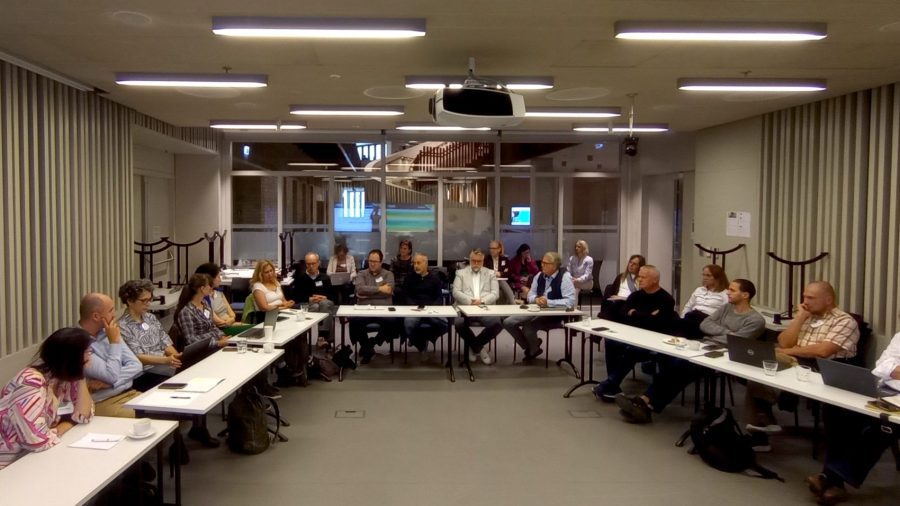
What role can municipalities play in renovating residential buildings, and how can the necessary financing, advisory services and technical expertise be made available? How can the worst-performing buildings and the vulnerable households living in them be identified? To what extent do these two categories overlap, and where do important differences emerge? These were among the key questions discussed by representatives of municipalities, ministries, professional associations and civil society organisations at the JustReno project workshop held on 12 October 2026. Organised by the Hungarian Energy Efficiency Institute (MEHI) and Városkutatás Kft. (Metropolitan Research Institute), the event brought together more than twenty participants to discuss socially just building renovations, the forthcoming National Building Renovation Plan, and the coordination of policy measures at national and local levels.
Improving the energy performance of Hungary’s residential building stock presents climate policy, economic and social challenges, but also brings numerous benefits: greater comfort for residents, healthier living environments and more affordable energy. Moreover, this process contributes to reducing Hungary’s dependence on energy imports and creating new jobs.
Under the revised EU Energy Performance of Buildings Directive (EPBD), Member States are required to establish a renovation trajectory towards a zero-emission building stock by 2050. However, achieving these objectives is not merely a technical challenge, but also a social one: renovation efforts must also reach households that are most in need of energy efficiency improvements but lack the financial resources to undertake them.
The JustReno project focuses precisely on this challenge. It aims to support the identification of the worst-performing buildings and vulnerable households, while also providing a platform for developing local and national policy solutions that contribute to reducing energy consumption, alleviating energy poverty and improving the building stock.
The workshop provided an opportunity for experts involved in developing the national building renovation strategy, representatives of municipalities and ministries, and stakeholders working on financing mechanisms and One-Stop Shops (OSS) for building renovation to exchange experiences directly and jointly explore the barriers to implementation.
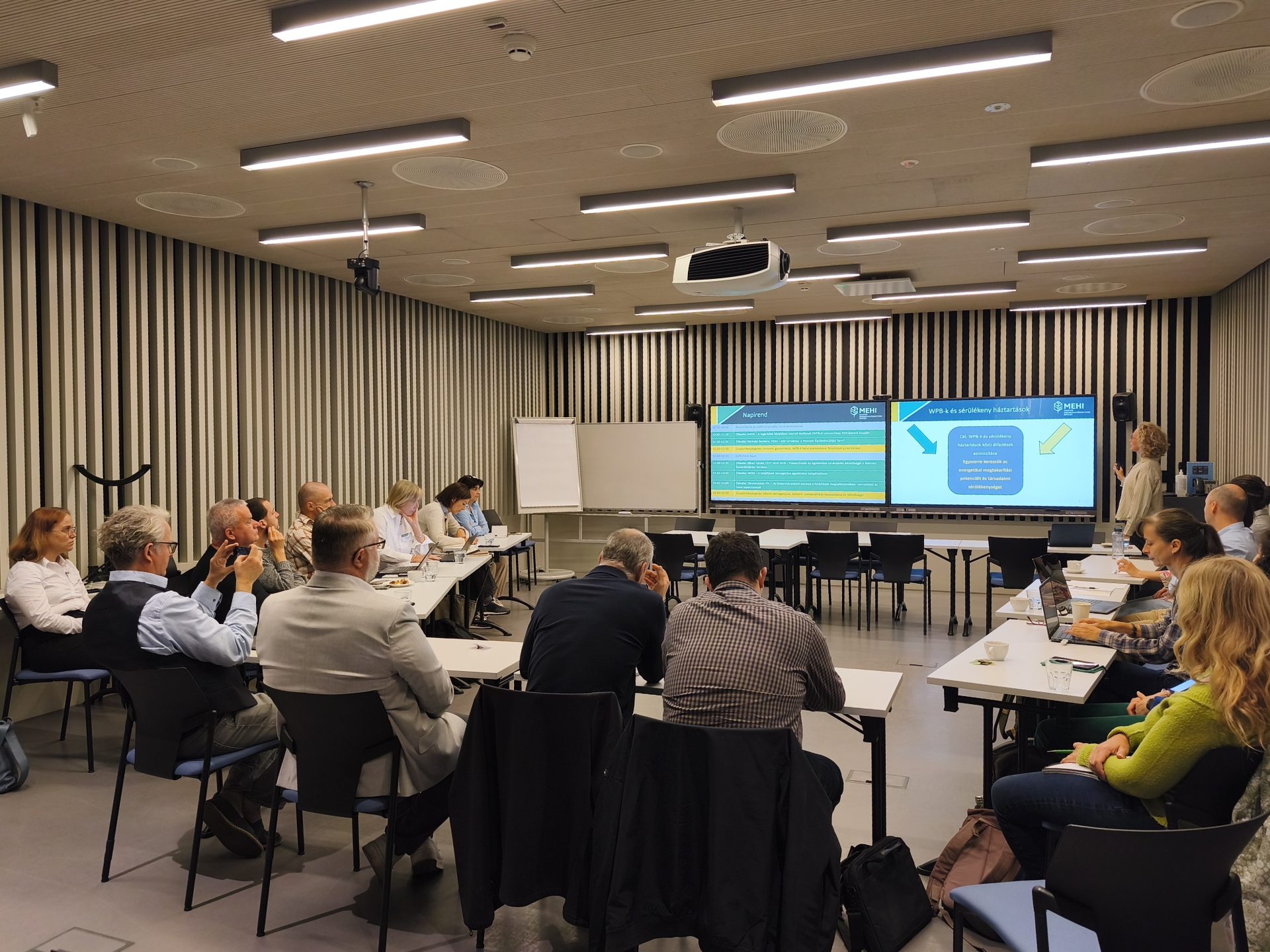
Implementing the updated EU regulatory framework brings new responsibilities for Hungarian municipalities
In the first part of the workshop, participants briefly reviewed the EU regulatory framework governing building renovations, focusing on the key provisions of the revised Energy Performance of Buildings Directive (EPBD), adopted in 2024, that are particularly relevant to municipalities.
The EPBD requires the gradual improvement of the energy performance of the residential building stock, with particular emphasis on the worst-performing buildings (WPBs). These buildings typically offer substantial potential for energy savings, while their renovation can also improve residents’ comfort, health and access to affordable energy.
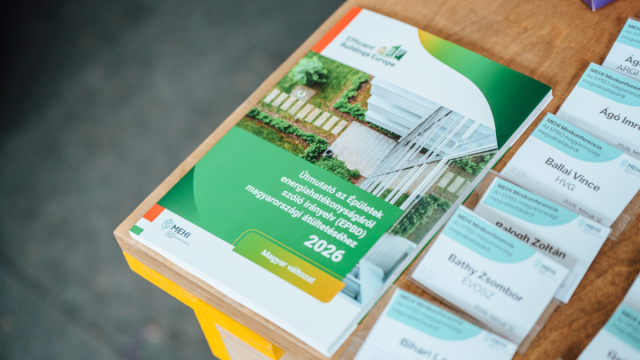
The revised directive also promotes the gradual phase-out of fossil fuels, improved financing mechanisms for building renovations, and the establishment of a network of One-Stop Shops (OSS) providing advice and support to property owners. An important provision of the directive is that, ideally, at least one such advisory centre should be established for every 80,000 inhabitants. MEHI’s EPBD guide (in Hungarian) is available here.
The Energy Efficiency Directive (EED) also strengthens the role of local authorities by requiring municipalities with more than 45,000 inhabitants to develop local heating and cooling plans.
However, municipalities are important actors not only because of their regulatory obligations. Their local knowledge, established relationships with residents, the trust they enjoy within their communities, and their existing institutional networks enable them to play a significant role in reaching households most in need of renovation.
One of the central questions discussed at the workshop was therefore how EU and national policy objectives can be translated into concrete, actionable measures at the local level.
Where are the residential buildings most in need of renovation?
Péter Sviszt, Data Analyst at MEHI, presented an overview of the energy performance of Hungary’s residential building stock and the socioeconomic characteristics of households living in the worst-performing buildings, based on a MEHI analysis drawing on data from the Hungarian Central Statistical Office (HCSO).
The database combines data from the 2022 population and housing census with the national energy performance certificate (EPC) database. For properties without an EPC, energy performance ratings were estimated using statistical methods. This makes it possible to obtain a reliable picture of the entire housing stock, rather than only those properties for which an EPC is available.
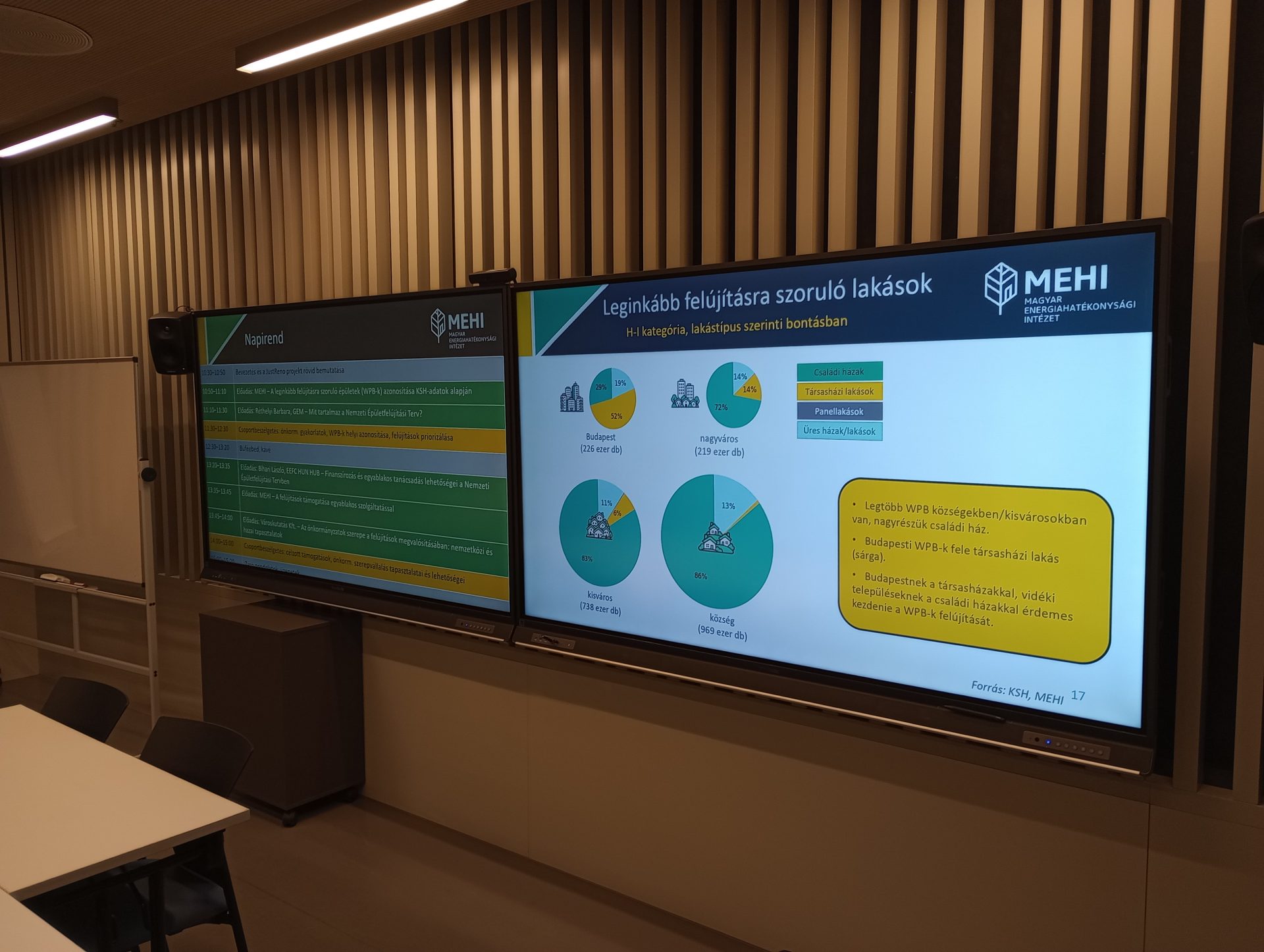
According to the estimates presented, 47% of dwellings in Hungary fall into the two lowest energy performance classes, H or I. Although this group cannot be directly equated with the worst-performing 43% of the building stock as defined under the EPBD, the authors argued that, given the similar proportions, H–I rated dwellings can serve as a proxy for the worst-performing segment of the housing stock (WPBs) for the purposes of the analysis.
The findings reveal significant differences across geographical areas and building types. The vast majority of dwellings most in need of renovation are located outside Budapest, particularly in smaller settlements, and are predominantly single-family houses. In Budapest, by contrast, a substantial share of poorly performing dwellings are located in multi-family buildings: apartments in these buildings account for nearly half of the capital’s WPBs.
These findings highlight the need to differentiate building renovation programmes by geographical area and building type. While improving the energy performance of single-family houses should be a priority in smaller settlements, renovations of multi-family buildings should also play a central role in Budapest and other major cities.
According to the energy performance classification used in the analysis, prefabricated panel buildings generally do not fall into the WPB category. However, this does not mean that their renovation is unnecessary. Renovating these buildings can contribute to reducing fossil fuel consumption and household energy bills. Moreover, their similar structural characteristics allow renovation measures to be largely standardised, enabling more cost-effective implementation.
MEHI’s analysis also examined which socioeconomic and housing characteristics could help identify dwellings with poor energy performance. The findings suggest that relevant indicators include low educational attainment, exclusive reliance on wood for heating, and individual room-based heating systems. Approximately 90% of dwellings heated exclusively with wood fall into the lowest energy performance classes, making this heating method a particularly useful indicator for identifying poorly performing segments of the housing stock. The share of dwellings with poor energy performance is also high among households consisting exclusively of pensioners. By contrast, unemployment alone is not a reliable indicator for identifying WPBs.
An important takeaway is that, although socioeconomically disadvantaged households are more likely to live in dwellings with poor energy performance, the two groups do not fully overlap. Targeting renovation subsidies therefore requires consideration of both the energy performance of the building and the household’s ability to finance renovations from its own resources. The findings presented can also provide municipalities with a valuable starting point for identifying and prioritising renovation needs.
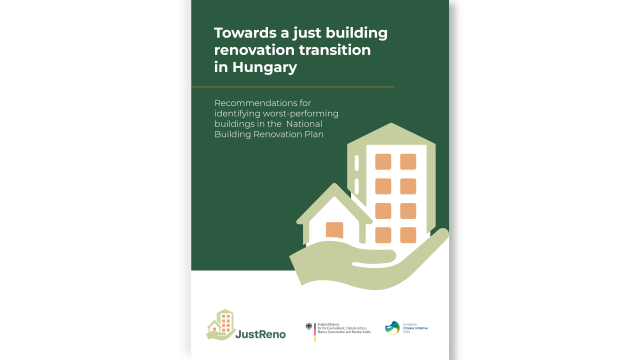
Our comprehensive analysis on identifying the worst-performing buildings and vulnerable households is available here.
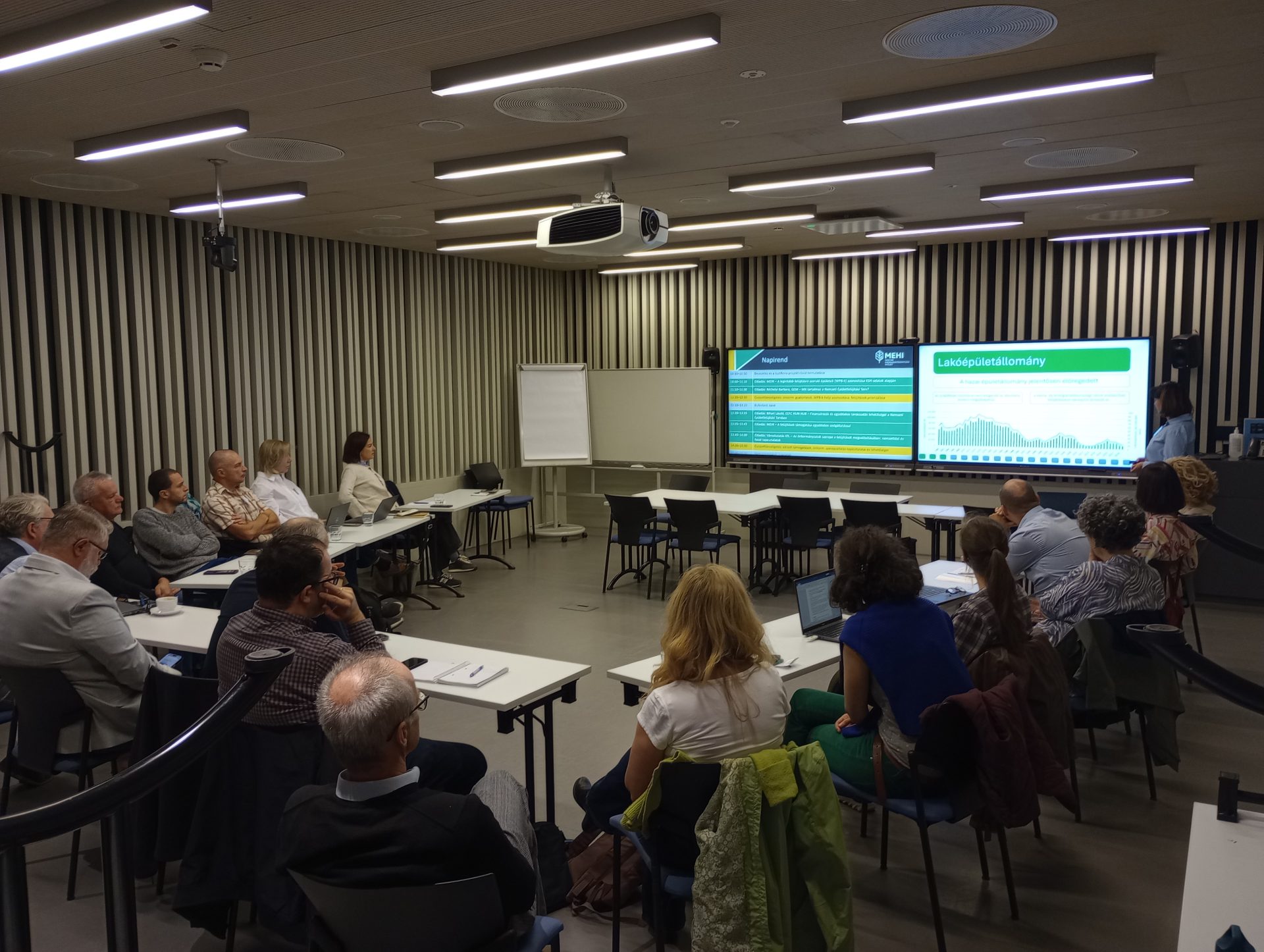
What is the current status of the National Building Renovation Plan?
A central topic of the workshop was the forthcoming National Building Renovation Plan (NBRP), which will serve as one of the key strategic documents guiding Hungary’s building renovation policies over the coming decades.
Barbara Réthelyi, Head of Department at the Ministry of Energy and Economy, presented an update on the plan’s preparation. The first draft of the document had already been completed and, at the time of the workshop in October 2026, was undergoing governmental review. The next steps include government approval and submission to the European Commission.
The NBRP establishes separate renovation trajectories for residential and non-residential buildings, taking into account the technical characteristics of the building stock, achievable energy savings, and the labour and material capacities of the construction sector. Under EU legislation, the average primary energy use of the residential building stock must be reduced by at least 16% by 2030 compared with 2020 levels.
One important question during the preparation of the plan has been how to define the worst-performing buildings. The threshold of 371 kWh/m²/year of total primary energy demand, used in earlier calculations, placed almost exclusively single-family houses within the worst-performing 43% of the building stock, while excluding a substantial proportion of multi-family buildings in need of renovation. Following expert consultations, the introduction of separate thresholds for different building types, reflecting the distinct energy performance characteristics of single-family and multi-family buildings, has therefore also been considered.
The economic feasibility of renovations is another important factor in designing renovation programmes. Particularly in the case of severely deteriorated properties and settlements experiencing depopulation, it is necessary to assess whether renovation or alternative housing solutions would deliver better long-term outcomes.
A key challenge in designing financing mechanisms is ensuring that public funding effectively reaches vulnerable households. The ministry’s preparatory work also includes refining Hungary’s definition of energy poverty, which requires appropriate income, housing and energy performance indicators.
However, significantly scaling up renovation activity cannot rely exclusively on non-repayable public grants. While vulnerable households may require high levels of grant support, preferential loans and other financial incentives may be suitable for property owners in a stronger financial position. Achieving this will require coordination between the National Building Renovation Plan, social and housing programmes, and measures under the Social Climate Fund.
Municipal experiences – data gaps, funding shortages and local priorities
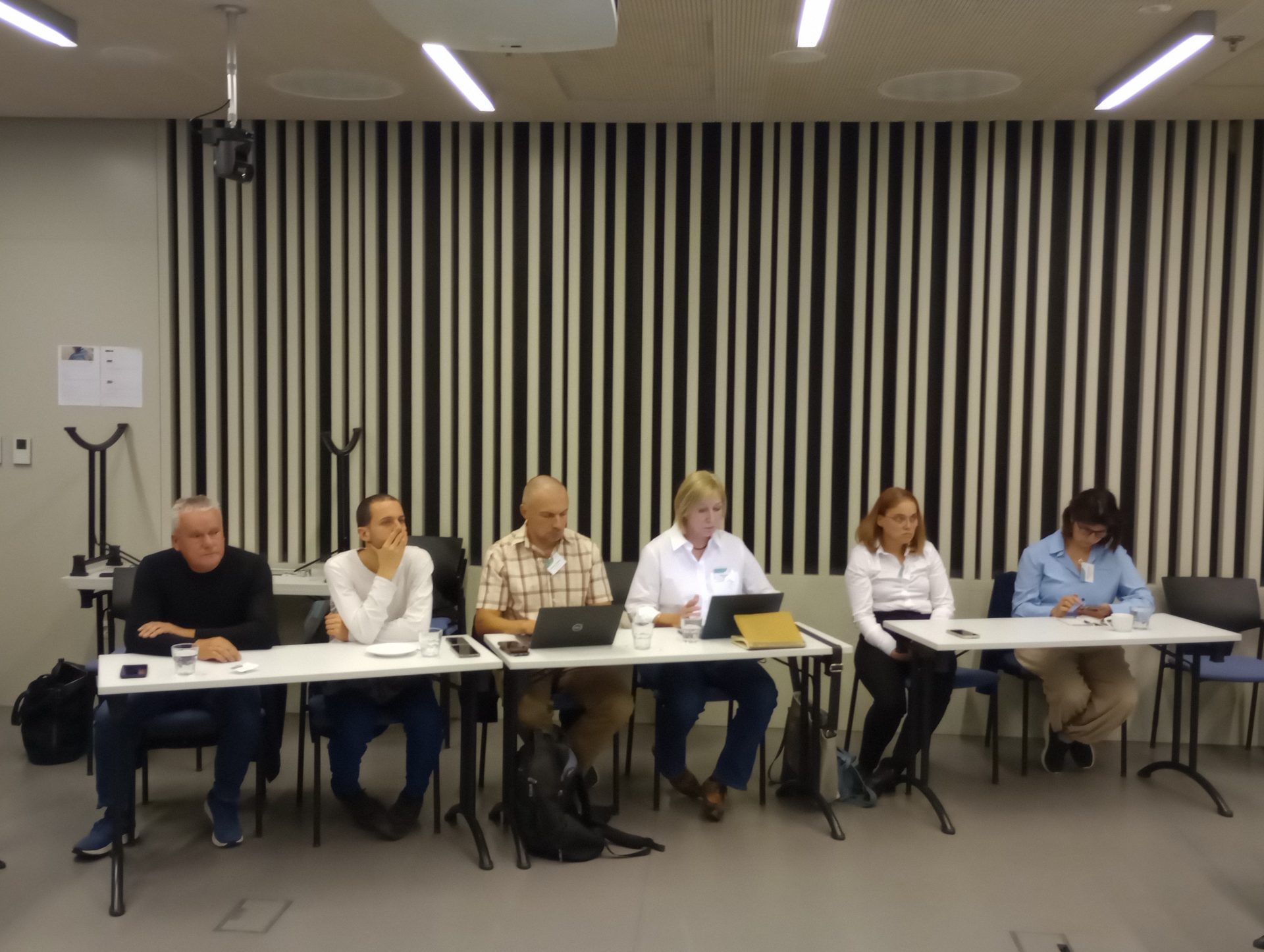
Sharing experiences from municipalities was an important part of the workshop. Contributions from representatives of Budapest’s city and district governments, regional cities and smaller municipalities highlighted significant differences in the conditions and barriers affecting building renovations across different types of settlements.
One recurring challenge was the lack of data on the energy performance of the building stock and difficulties accessing existing information. While technical and energy consumption data are generally available for municipally owned buildings, information on the energy performance of privately owned residential buildings is often fragmented. Access to energy performance certificates (EPCs) and energy utility data is further complicated by legal, data protection and administrative barriers. Municipalities therefore need more reliable, easily accessible databases with sufficient geographical detail.
Another major obstacle is the lack of financial resources and technical expertise. Many municipalities do not have enough energy experts on staff, nor do they always have the resources to hire external consultants. Available municipal funding is often sufficient only for basic maintenance, urgent repairs and smaller interventions, rather than comprehensive deep energy renovations.
Participants also learned about local renovation support schemes for multi-family buildings through the example of a Budapest district. With a funding budget of approximately HUF 70 million, the district supported the renovation of 13 buildings. It also operates separate support schemes for social purposes, protected buildings and urgent structural or technical issues.
Experiences from other municipalities highlighted how building energy efficiency objectives are often closely linked to social and housing policy challenges. For example, sufficient funding is frequently unavailable for renovating municipally owned rental housing, while smaller settlements face particularly serious challenges related to the poor physical condition of single-family houses and residents’ limited ability to finance improvements.
The discussions also explored how municipal support schemes could complement national renovation programmes. Local funding could, for example, help finance essential maintenance and preparatory works required before energy efficiency investments, or cover the co-financing contributions of vulnerable households. This could be particularly important in multi-family buildings, where the financial difficulties of just a few property owners can prevent the renovation of an entire building.
One-stop-shop advisory network: a key to implementing building renovations
A key topic of the workshop was the development of a One-Stop-Shop (OSS) system for building renovations. Financing opportunities alone are not necessarily sufficient to get renovation projects off the ground: homeowners may also need assistance with technical planning, selecting contractors, applying for subsidies and organising renovation works.
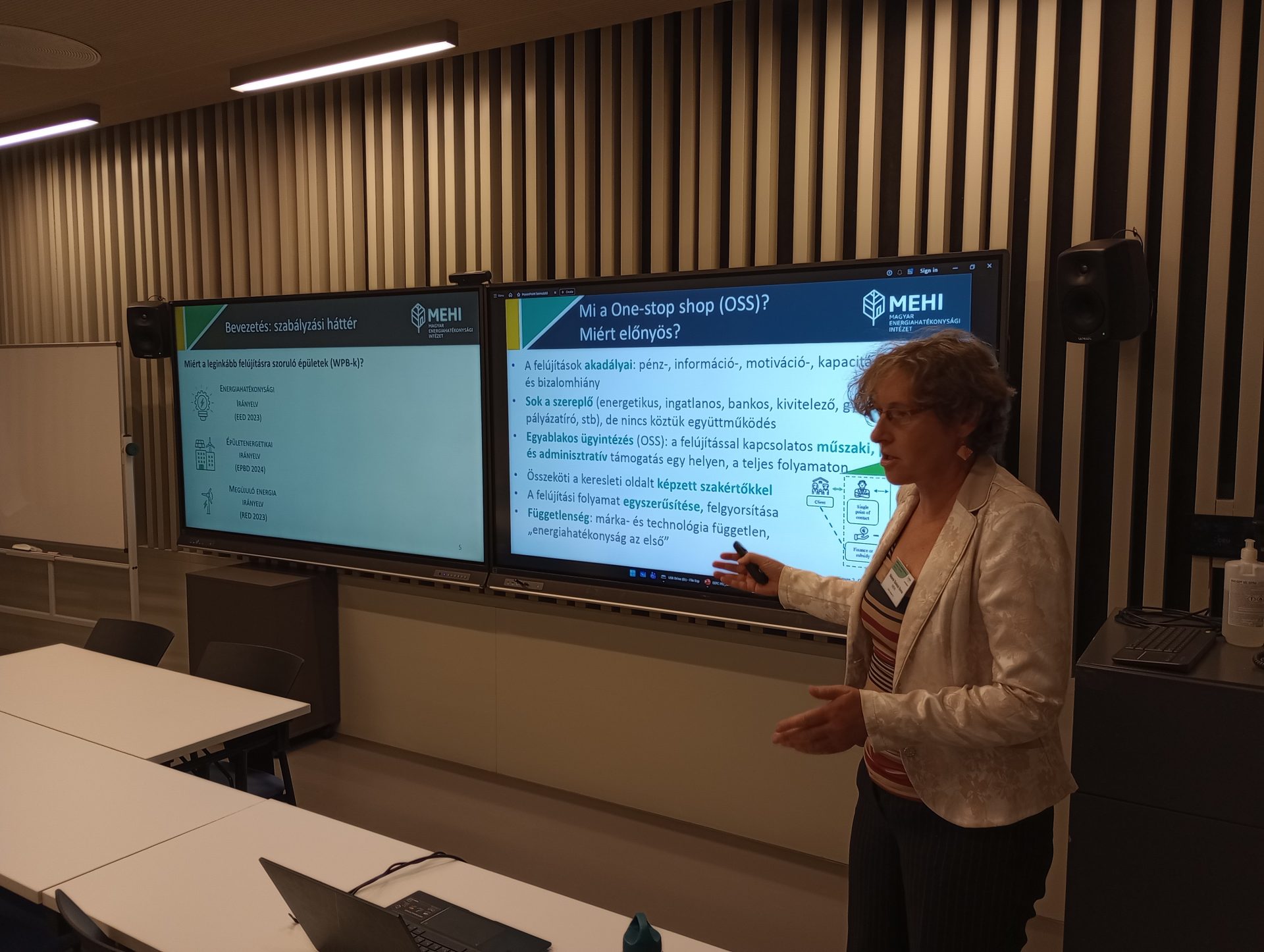
Ilona Illésné Szécsi (MEHI) presented Hungary’s experience with One-Stop Shops for home renovation. She outlined recommendations for establishing and operating an effective nationwide OSS network and presented economic, climate policy and political arguments for why municipalities should consider operating such services. The presentation also covered MEHI’s own OSS offices, established under the RenoPont project.
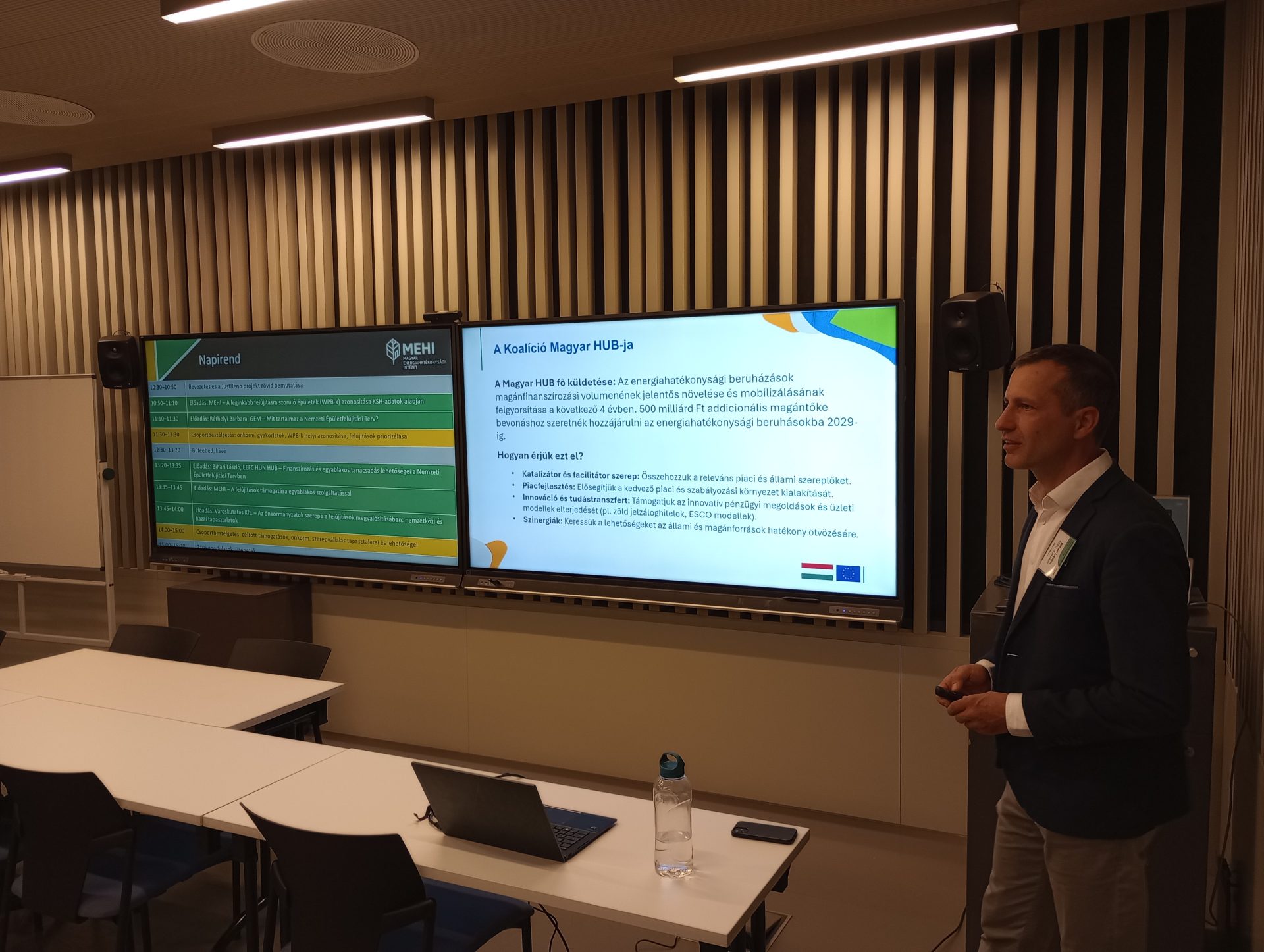
László Bihari, Head of the Hungarian Hub of the Energy Efficiency Financial Coalition (EEFC), presented developments in the nationwide One-Stop-Shop advisory network and new financing opportunities for building renovations. By aggregating multiple smaller investments, One-Stop Shops can create larger project portfolios that reach a scale attractive to financial institutions. He emphasised that the objectives set out in the EPBD cannot be achieved through public funding alone, making greater mobilisation of private finance essential.
One potential foundation for the nationwide advisory network is the NERO pilot project, which would combine a digital support platform, standardised renovation solutions and local, in-person advisory centres. The proposed system would guide homeowners through a structured ten-step process, from their initial intention to renovate through to project implementation. Pécs and Nyíregyháza are among the planned pilot locations.
The workshop also explored the possibility of a multi-level operating model, combining national digital infrastructure and methodological support with regional expert capacities and local advisory centres. Within this framework, municipalities could play a role in providing basic information, referring residents to appropriate experts and engaging local communities.
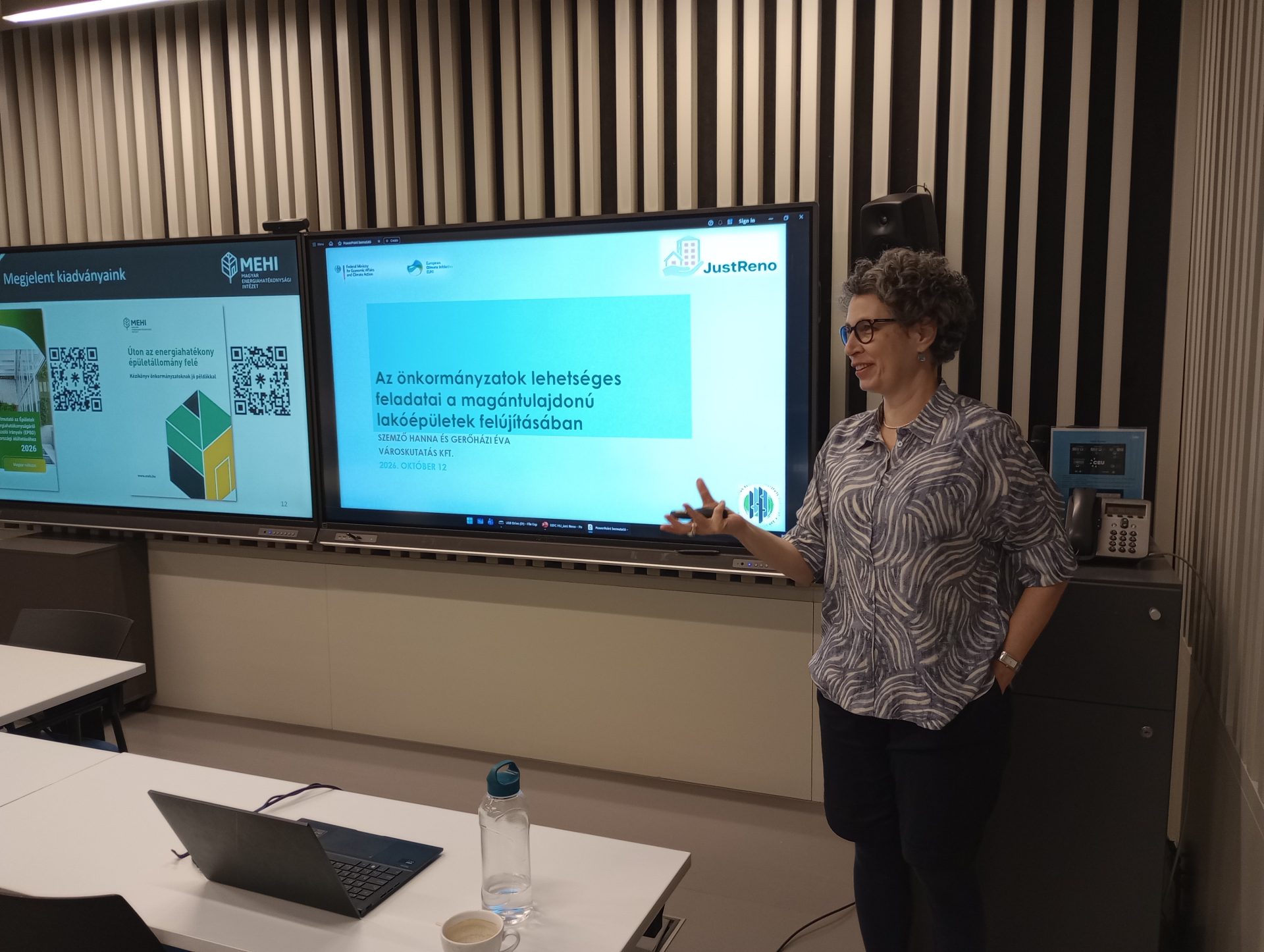
Metropolitan Research Institute (Városkutatás Kft.) presented One-Stop-Shop models from Vienna, Burgas and Vilnius. In Vienna, free advisory services are supported by a stable municipal institutional framework. In Burgas, advisory capacities are adjusted to demand for renovation subsidy programmes, while in Vilnius, the service goes beyond traditional advice by actively initiating and facilitating the preparation of renovation projects in multi-family buildings.
The international examples suggest that successful One-Stop-Shop systems require stable funding, adequate professional expertise, active communication with residents and a predictable subsidy framework.
Based on Hungarian experiences, particular attention should be paid to training property managers of multi-family buildings and developing standardised renovation packages for common building types, such as prefabricated panel buildings and Kádár cubes (standardised detached houses built during Hungary’s socialist era). Pre-designed technical solutions can reduce preparation costs and simplify the renovation process.
However, reaching vulnerable households and residents of smaller settlements requires more than digital platforms or advisory offices in major cities. The personal connections and trust established through local governments, social services and civil society organisations can be essential in ensuring that renovation opportunities also reach those most in need.
No renovation wave without aligning national objectives with local implementation capacities
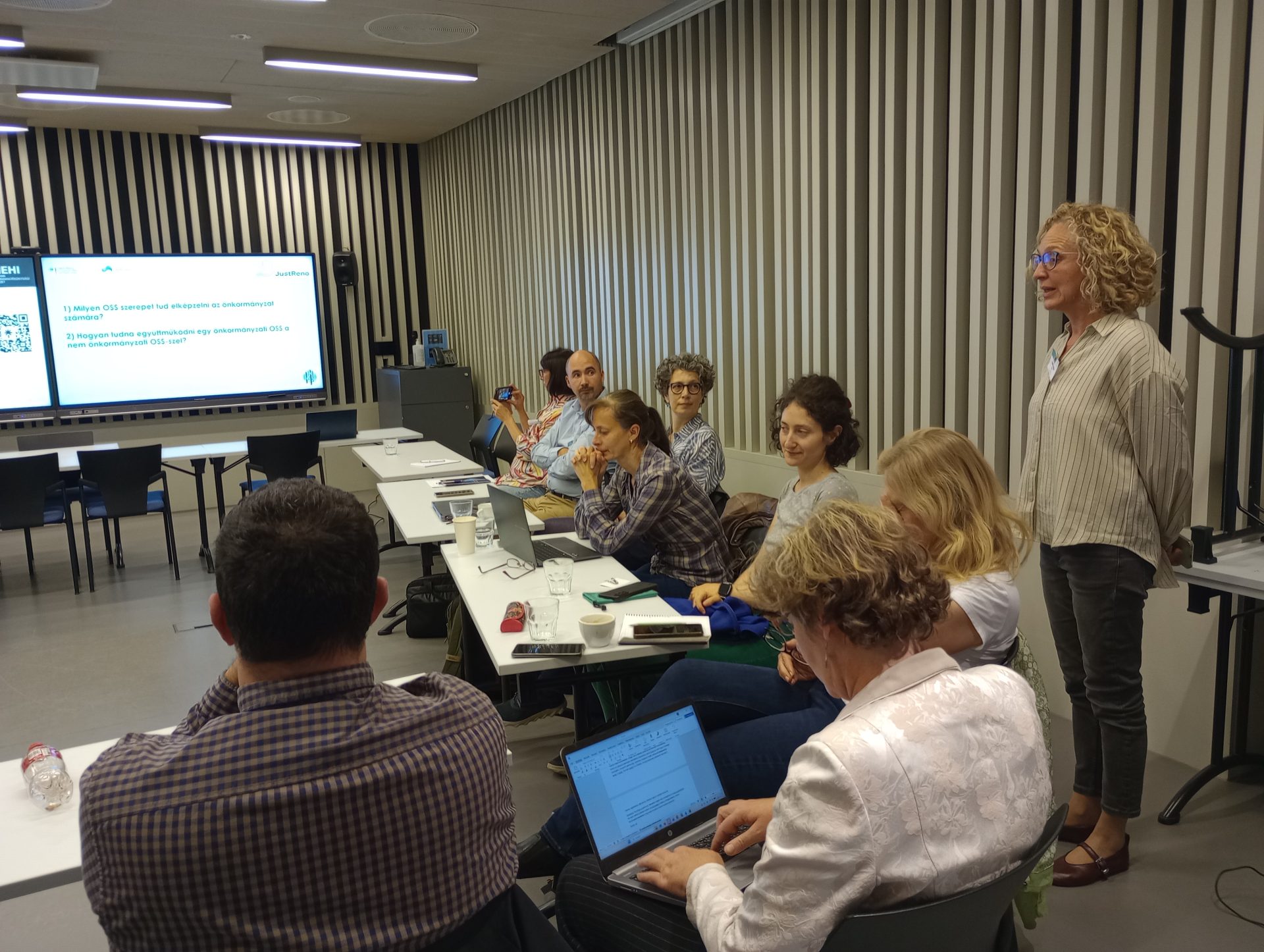
One of the key takeaways from the JustReno expert workshop was that accelerating building renovations in Hungary requires better coordination between national policy objectives and local implementation capacities.
The forthcoming National Building Renovation Plan can establish the renovation trajectory and priorities for the coming decades, but achieving these objectives will only be possible with adequate financial, institutional and advisory support. To fulfil their role, municipalities need better access to data, predictable funding programmes and sufficient technical expertise.
A fundamental prerequisite for successful renovation policies is to consider both the energy performance of buildings and the socioeconomic circumstances of their occupants. Alongside targeted financial support, cooperation between One-Stop-Shop advisory networks, local authorities and civil society organisations can help ensure that the households most in need are not left behind in renovation programmes.
The workshop also highlighted that financial incentives alone are not sufficient to trigger a renovation wave. Reliable data, technical assistance, construction sector capacity, public trust and long-term policy predictability are all essential to creating the conditions for successful implementation.
The JustReno project is implemented under the European Climate Initiative (EUKI). EUKI is a project financing instrument of the German Federal Ministry for the Environment, Climate Action, Nature Conservation and Nuclear Safety (BMUKN), implemented with the support of Deutsche Gesellschaft für Internationale Zusammenarbeit (GIZ) GmbH. The project aims to promote the socially just decarbonisation of the building stock, with particular attention to vulnerable households and the worst-performing buildings.
Organizers of the 12 October event:


The JustReno project is financed by: